
Posted on February 25, 2026 by International Advisory Council
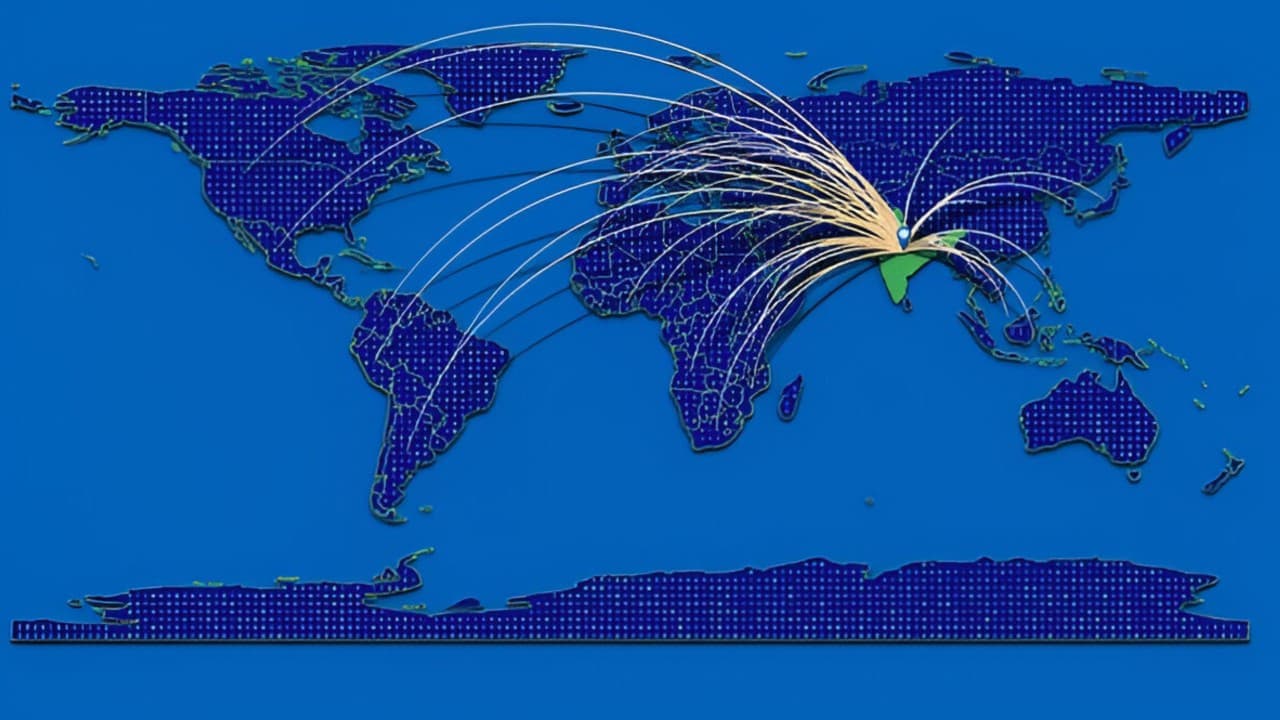
India’s trade strategy is undergoing a significant transformation. After a cautious phase in earlier years, the country is now actively expanding its network of Free Trade Agreements (FTAs) and economic partnerships. This shift is reshaping India’s positioning within global supply chains and creating new opportunities for export-oriented investors.
For multinational companies, Economic Development Boards (EDBs) and Investment Promotion Agencies (IPAs), India’s evolving FTA architecture is becoming an increasingly important factor in market-entry and manufacturing decisions.
India’s recent trade approach reflects a broader shift from viewing FTAs primarily as tariff-reduction tools to positioning them as instruments of deeper economic integration.
New-generation agreements are increasingly covering:
This more comprehensive framework is designed to enhance India’s role in global value chains rather than simply expand bilateral trade volumes.
India’s expanding FTA network is particularly relevant for companies looking to use the country as a production and export base.
Several structural advantages are emerging:
Improved market access: Preferential tariff pathways can enhance the competitiveness of India-based manufacturing.
Supply chain diversification: Companies pursuing multi-location strategies are evaluating India as part of broader regional manufacturing footprints.
Policy predictability: Formal trade agreements provide greater long-term visibility for investors planning export-oriented operations.
Services mobility: For knowledge-driven sectors, improved services provisions can support cross-border delivery models.
As global supply chains continue to rebalance, these factors are becoming increasingly material to investment decisions.
India’s FTA expansion is also closely linked to its domestic industrial strategy. Production-Linked Incentive (PLI) schemes, logistics upgrades and infrastructure investments are being complemented by trade agreements that open external markets.
This coordinated approach strengthens India’s attractiveness for sectors such as:
For export-oriented investors, the combination of domestic incentives and external market access is particularly compelling.
Despite the positive momentum, companies evaluating India through the FTA lens should conduct detailed analysis at the sector level.
Key considerations include:
The benefits of FTAs are often realised through careful operational structuring rather than headline provisions alone.
At the International Advisory Council, we see India’s expanding FTA network as a strategic enabler of the country’s next export growth cycle. The shift toward deeper economic partnerships is reinforcing India’s role in global supply chain diversification.
For IPAs, EDBs and multinational investors, the opportunity lies in aligning manufacturing and services strategies with India’s evolving trade architecture.
As global trade patterns continue to rebalance through 2030, India’s ability to combine domestic scale with expanding market access is likely to remain a powerful draw for export-oriented investment.
Subscribe To Indiaʼs Growth Story
Copyright © International Advisory Council. All rights reserved