

Posted on February 20, 2026 by International Advisory Council
India’s foreign direct investment (FDI) story is entering a new phase. While the country has long attracted capital into traditional sectors such as services and manufacturing, the next wave of investment is expected to be far more technology-driven, sustainability-linked and ecosystem-focused.
For global investors, Economic Development Boards (EDBs) and Investment Promotion Agencies (IPAs), understanding where capital is likely to concentrate by 2030 is becoming critical for strategic positioning.
Based on current policy direction, investor behaviour and structural demand drivers, several sectors are emerging as clear frontrunners.
India’s digital economy continues to expand rapidly, supported by strong policy momentum around artificial intelligence, data infrastructure and digital public platforms. Global technology firms are increasingly viewing India not just as a services hub but as a location for building AI models, cloud infrastructure and data capabilities.
Key drivers include:
By 2030, AI-led investment is expected to move beyond IT services into healthcare analytics, fintech, manufacturing automation and public digital systems.
Global Capability Centres (GCCs) are undergoing a structural upgrade in India. What began as back-office operations has evolved into high-value hubs handling product engineering, cybersecurity, risk analytics and R&D.
Multinational firms are increasingly consolidating global functions into India-based centres due to:
The next wave of GCC investment is likely to expand into tier-2 cities, creating new geographic investment corridors.
India’s net-zero commitments and energy transition roadmap are opening large-scale opportunities across renewable energy, green hydrogen, battery storage and grid modernisation.
Long-term projections indicate that the country will require massive capital deployment in the power and energy ecosystem through 2070. This creates sustained opportunity for infrastructure funds, sovereign investors and strategic energy players.
Particularly attractive sub-segments include:
For global investors with long-duration capital, India’s energy transition is emerging as one of the most investable themes of the decade.
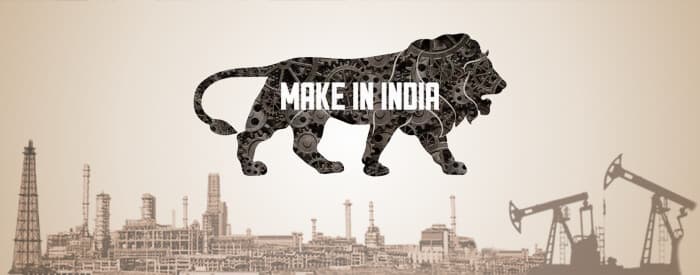
India’s push for supply chain diversification is also gaining traction. Production-linked incentives (PLIs), improving logistics infrastructure and geopolitical realignment are supporting growth in electronics, semiconductors and precision manufacturing.
As global firms pursue “China+1” and multi-location strategies, India is positioning itself as a scalable manufacturing alternative in Asia.
At the International Advisory Council, we see India’s next FDI cycle being defined less by broad market potential and more by sector-specific depth and ecosystem readiness.
Investors who succeed in India by 2030 will likely be those who align early with three structural themes:
India’s investment opportunity remains compelling, but it is becoming more specialised. For IPAs, EDBs and global firms, the strategic imperative is clear: move beyond a generic India strategy toward targeted sector engagement.
Subscribe To Indiaʼs Growth Story
Copyright © International Advisory Council. All rights reserved